
Understanding the symptoms, possible causes and why a thorough assessment matters.
Over my many years working as a podiatrist, I’ve seen countless patients experiencing unusual sensations in their feet. Some describe tingling or burning, others complain that their feet feel numb, cold or strangely uncomfortable. Occasionally, patients tell me that they feel as though they’re walking on cotton wool, wearing socks when they’re barefoot, or have something bunched up underneath their toes.
 One conversation I’m having increasingly often goes something like this:
“My doctor thinks I’ve got neuropathy, but I don’t have diabetes. Why would I have it?”
Sometimes patients have been told they probably have peripheral neuropathy without having undergone a detailed sensory examination or investigations to help identify the underlying cause.
While peripheral neuropathy is common, particularly as we get older, it is important to understand that neuropathy describes a problem affecting the peripheral nerves. It doesn’t, by itself, explain why those nerves aren’t functioning normally.
And understanding the why can be just as important as recognising the symptoms.
What Exactly Is Peripheral Neuropathy?
Our peripheral nervous system is an extensive network of nerves connecting the brain and spinal cord to the rest of the body. These nerves carry information in both directions. Sensory nerves allow us to detect touch, pressure, temperature, pain and vibration. Motor nerves control muscle activity, while autonomic nerves help regulate functions such as sweating, blood pressure and digestion.
When peripheral nerves become damaged or stop functioning normally, the messages travelling between the body and brain may become disrupted. This is known as peripheral neuropathy. Although neuropathy can affect many parts of the body, it frequently begins in the feet because the longest nerves in the body are often particularly vulnerable to damage.
In many common forms of neuropathy, symptoms gradually develop in the toes and feet before progressing upwards towards the ankles and lower legs. The hands may become involved later. This is often described as a stocking-and-glove distribution. However, not all neuropathies follow this pattern, which is one reason why a careful clinical assessment is so important. [1, 2]
What Are the Symptoms of Peripheral Neuropathy?
One of the challenges with peripheral neuropathy is that symptoms vary considerably between individuals. Some people experience considerable discomfort, while others have very little pain despite significant sensory loss.
Common symptoms include:
- Numbness: Reduced ability to feel touch, pressure or contact with the ground.
- Tingling or pins and needles: Sometimes described as buzzing, prickling or crawling sensations.
- Burning pain: Often more noticeable at night or when resting.
- Electric-shock sensations: Sudden shooting or stabbing pains in the feet or toes.
- Altered temperature sensation: Feet may feel unusually hot or cold, even when their actual temperature is normal.
- Increased sensitivity: Light touch from bed sheets or socks may become uncomfortable or painful.
- Reduced balance: Particularly when walking in dim lighting or on uneven surfaces.
- Muscle weakness: Some neuropathies affect the motor nerves, resulting in weakness, changes in walking patterns or difficulty lifting the front of the foot.
An important point I regularly discuss with patients is that you don’t have to experience pain to have peripheral neuropathy. In fact, some people with significant sensory loss have no pain at all.
This can be particularly concerning because reduced protective sensation may mean a person doesn’t notice a blister, minor injury, excessive pressure from footwear or a developing wound. [1, 3]
Why Does Peripheral Neuropathy Develop?
Many people associate peripheral neuropathy with diabetes, and for good reason. Diabetes is a well-recognised cause of peripheral nerve damage. However, it is certainly not the only cause.
There are numerous medical conditions and other factors that can affect peripheral nerve function.
- Diabetes and impaired glucose regulation
Persistently elevated blood glucose levels can damage peripheral nerves and the small blood vessels that supply them. Neuropathy may also occur in some people with impaired glucose regulation or prediabetes, although other potential causes should still be considered.
- Vitamin deficiencies and supplement-related neuropathy
Certain vitamins are essential for normal nerve function. Vitamin B12 deficiency, for example, can cause sensory changes, balance difficulties and peripheral nerve damage. Interestingly, excessive intake of vitamin B6, often from supplements, can also cause neuropathy.
In Australia, the Therapeutic Goods Administration (TGA) has specifically warned that vitamin B6 intake from supplements can cause peripheral neuropathy. Vitamin B6 is not always prominently identified on the front of supplement packaging. It may be included in magnesium preparations, multivitamins and other nutritional products. Some people unknowingly consume vitamin B6 from several different supplements each day. The TGA has reported cases of neuropathy even at relatively low supplemental doses, with individual susceptibility varying considerably. For this reason, I encourage patients experiencing unexplained sensory symptoms to bring a complete list of their medications and supplements to their assessment.
Sometimes, something as straightforward as reviewing what a person is taking can provide an important clue. Anyone concerned that a supplement may be contributing to their symptoms should seek advice from their GP or pharmacist rather than assuming that all vitamin products are harmless. [4]
- Thyroid and other metabolic disorders
An underactive thyroid, kidney disease and some other metabolic conditions can contribute to peripheral nerve dysfunction.
- Alcohol-related nerve damage
Long-term excessive alcohol consumption can damage peripheral nerves, sometimes in combination with nutritional deficiencies.
- Medication-related neuropathy
Some medications, particularly certain chemotherapy treatments, are known to cause peripheral neuropathy. Other medications may occasionally contribute, depending on the drug, dose and individual circumstances. Medications should not be stopped or changed without appropriate medical advice.
- Autoimmune and inflammatory conditions
Some autoimmune disorders can affect peripheral nerves through inflammatory or immune-mediated processes. These conditions may require specialist investigation and treatment.
- Nerve compression or injury
Not every tingling or numb sensation in the foot is caused by a generalised peripheral neuropathy. A compressed nerve in the lower back, ankle or foot can produce similar symptoms. Conditions such as tarsal tunnel syndrome, lumbar nerve root compression and other local nerve entrapments may need to be considered.
- Hereditary neuropathies
Some neuropathies are associated with inherited conditions that affect the structure or function of peripheral nerves. A family history of unusual foot shapes, progressive muscle weakness, balance difficulties or longstanding walking problems may provide important clues.
- Idiopathic peripheral neuropathy
Sometimes, despite appropriate investigations, no underlying cause can be identified. This is known as idiopathic neuropathy. It is more frequently encountered in older adults. However, I believe it is important to distinguish between a neuropathy that remains unexplained after appropriate investigation and one where the possible causes have not yet been explored. [1, 2]
Why Is a Thorough Assessment So Important?
When someone tells me they have numbness, burning or tingling in their feet, I want to understand more than simply whether they can feel a particular stimulus. I want to know when the symptoms began, how they have progressed, whether both feet are affected equally and whether there are associated changes in strength, walking or balance.
I also want to understand the person’s medical history, medications, nutritional factors and any other symptoms that may provide clues. A comprehensive assessment can help determine whether the symptoms are consistent with peripheral nerve dysfunction, which types of sensory function may be affected and whether further medical investigation is appropriate.
Importantly, a sensory assessment can identify patterns of abnormal nerve function, but it cannot always establish the underlying cause of neuropathy. That often requires a collaborative approach involving the patient’s GP and, where appropriate, a neurologist or other specialist. [1, 2]
What Happens During a Neurosensory Assessment?
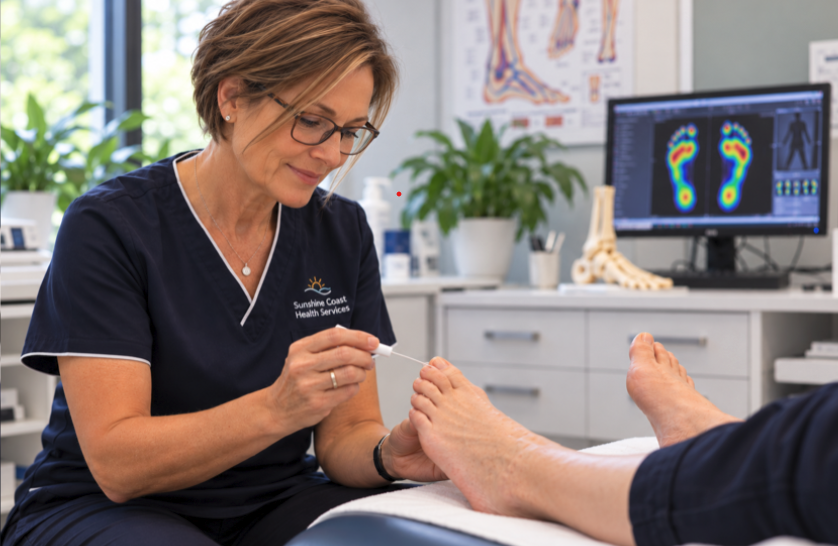
At Sunshine Coast Health Services, my approach involves looking at both sensory function and the practical impact that altered sensation may be having on a person’s mobility and everyday activities. Depending on the individual’s symptoms and clinical presentation, an assessment may include several components.
Protective sensation
Using a calibrated monofilament, we assess the ability to detect light pressure at specific locations on the feet. This is particularly important when assessing the risk of unnoticed injuries and foot complications.
Vibration perception
Vibration testing helps assess the function of certain sensory nerve pathways. Changes in vibration perception may be associated with peripheral nerve dysfunction, although results need to be interpreted alongside other clinical findings and age-related changes.
Light touch, temperature and other sensory testing
Different types of sensory receptors and nerve fibres respond to different stimuli. Assessing several sensory modalities can provide a more complete picture than relying on a single test.
Muscle strength and neurological function
Where indicated, I assess muscle strength, relevant reflexes and other neurological signs.
These findings may help distinguish between different patterns of nerve dysfunction and identify when further investigation is required.
Balance and walking assessment
This is an area I consider particularly important. Our feet provide the brain with a constant stream of sensory information about the surface beneath us and the position of our body. When that information becomes less reliable, maintaining balance can become more challenging. Depending on the individual’s needs, I may assess standing balance, walking speed, turning, functional mobility and performance during tasks that challenge balance.
Footwear and foot health
I also assess footwear, skin integrity, pressure areas and any structural or functional changes in the feet. For someone with reduced sensation, poorly fitting footwear or unrecognised pressure can have significant consequences. Together, these assessments help build a picture of how sensory changes may be affecting the person, rather than focusing solely on an individual test result. [2, 3]
What About Blood Tests and Other Investigations?
If peripheral neuropathy is suspected, medical investigations may be appropriate to look for potentially treatable causes. Depending on the clinical presentation, a GP may consider investigations such as:
- Blood glucose or HbA1c testing.
- Vitamin B12 levels.
- Thyroid function.
- Kidney and liver function.
- Full blood examination.
- Serum protein studies to investigate certain abnormal proteins associated with neuropathy.
Other investigations may be indicated depending on symptoms, examination findings and medical history. In some circumstances, nerve conduction studies and electromyography may be recommended to assess the electrical function of peripheral nerves and muscles. It is worth noting that standard nerve conduction studies primarily assess larger nerve fibres. People with suspected small-fibre neuropathy may have normal results and require different investigations. Not everyone needs every test. The important thing is that investigations are guided by a careful clinical assessment rather than performed indiscriminately. [1, 2, 5]
Can Peripheral Neuropathy Be Treated?
This is one of the most common questions patients ask me. The answer depends largely on the underlying cause and the type and extent of nerve involvement. Some causes of neuropathy are potentially treatable. For example, identifying and correcting a vitamin deficiency, addressing an underlying metabolic condition or reviewing a contributing medication may help prevent further damage and, in some circumstances, improve symptoms.
Other neuropathies may be longstanding or progressive. Unfortunately, there is no single treatment that reverses all forms of peripheral nerve damage. However, there is often a great deal we can do to improve comfort, reduce complications and help people maintain their mobility and independence.
Management may involve medical treatment of the underlying condition, medication for neuropathic pain where appropriate, physiotherapy, exercise physiology, podiatry and practical strategies to protect the feet. [1, 8]
Why Balance and Mobility Matter
One aspect of peripheral neuropathy that I feel deserves more attention is its relationship with balance. We tend to think of balance as something controlled by our eyes and inner ears. While these systems are extremely important, sensory information from the feet and lower limbs also plays a major role. This sensory feedback helps the brain recognise where the body is positioned and how it is moving.
When sensation is reduced, the brain may need to rely more heavily on visual information to maintain stability. This helps explain why some people with peripheral neuropathy feel reasonably steady during the day but become less confident walking in dim lighting or at night. They may also notice difficulty walking on grass, gravel or other uneven surfaces. In my clinical practice, I am particularly interested in identifying these functional changes early.
Appropriately prescribed strength, balance and mobility exercises can help improve physical function and may reduce falls risk, even when sensory deficits cannot be fully reversed. Research involving people with diabetic peripheral neuropathy suggests that targeted rehabilitation can improve certain measures of balance, although the evidence for reducing actual falls remains less certain.
The key is to develop an individualised program that reflects the person’s abilities, medical conditions and specific balance challenges. [3, 6]
Practical Ways to Protect Your Feet
If you have peripheral neuropathy, there are several simple steps you can take to help protect your feet and maintain your independence.
- Check your feet regularly. Look for redness, blisters, cuts, swelling or changes in skin colour. If you have reduced protective sensation, daily inspection is particularly important.
- Choose footwear carefully. Shoes should fit securely, provide adequate protection and avoid excessive pressure or friction. Check inside shoes for foreign objects before putting them on.
- Avoid walking barefoot if sensation is reduced. Minor injuries may go unnoticed.
- Be careful with heat. Avoid hot-water bottles, heating pads or testing bathwater temperature with your feet if temperature sensation is impaired.
- Stay physically active. Appropriate exercise can support muscle strength, balance and general health.
- Pay attention to changes. Increasing numbness, new weakness, changes in walking or unexplained injuries should be assessed.
These recommendations are particularly important for people who have lost protective sensation and may be at increased risk of foot injuries or ulceration. [3, 7]
When Should You Seek Further Advice?
If you are experiencing persistent numbness, tingling, burning or altered sensation in your feet, I would encourage you to seek a clinical assessment. This is particularly important if symptoms are progressing, affecting your balance or interfering with sleep and daily activities.
Symptoms that develop suddenly, progress rapidly or cause significant new weakness require urgent medical assessment. New bladder or bowel dysfunction associated with neurological symptoms may require emergency assessment. A new foot wound, particularly in someone with diabetes or reduced protective sensation, also deserves prompt attention.
My Final Thoughts
After more than 35 years in podiatry, one thing I have learnt is that listening carefully to how patients describe their symptoms can provide valuable clinical information.
The person who feels as though they’re walking on cotton wool may be experiencing something quite different from the person whose feet burn intensely at night.
Both may have peripheral neuropathy, but the underlying mechanisms, causes and management needs can be very different.
My message is simple:
If you’ve been told you have peripheral neuropathy, it’s reasonable to ask what may be causing it, whether further investigation is needed and what can be done to protect your long-term foot health.
A diagnosis should help guide the next steps, not leave you with more questions than answers.
At Sunshine Coast Health Services, I provide detailed podiatric and neurosensory assessments, with particular attention to the relationship between sensation, foot function, balance and mobility.
My aim is to help patients better understand their symptoms, identify potential risks and work collaboratively with their other health professionals to support their long-term wellbeing.
If you’re concerned about numbness, tingling, burning or unexplained changes in your feet, contact Sunshine Coast Health Services to arrange an assessment.
References and Further Reading
- Mirian, A., et al. (2023). Diagnosis and management of patients with polyneuropathy. Canadian Medical Association Journal, 195(6), E227–E233.
https://doi.org/10.1503/cmaj.220936 - Castelli, G., Desai, K. M., & Cantone, R. E. (2020). Peripheral neuropathy: Evaluation and differential diagnosis. American Family Physician, 102(12), 732–739.
https://www.aafp.org/pubs/afp/issues/2020/1215/p732.html - American Diabetes Association Professional Practice Committee. (2026). Retinopathy, neuropathy, and foot care: Standards of Care in Diabetes—2026. Diabetes Care.
https://doi.org/10.2337/dc26-s012 - Therapeutic Goods Administration. Peripheral neuropathy with supplementary vitamin B6 (pyridoxine). Australian Government.
https://www.tga.gov.au/news/safety-updates/peripheral-neuropathy-supplementary-vitamin-b6-pyridoxine - Review of techniques useful for the assessment of sensory small fiber neuropathies: Report from an IFCN expert group. (2022). Clinical Neurophysiology, 136, 13–38.
https://doi.org/10.1016/j.clinph.2022.01.002 - Alissa, N., et al. (2024). A systematic review of the effect of physical rehabilitation on balance in people with diabetic peripheral neuropathy who are at risk of falling. Clinical Interventions in Aging.
https://doi.org/10.2147/CIA.S459492 - Bus, S. A., et al. (2024). Guidelines on the prevention of foot ulcers in persons with diabetes (IWGDF 2023 update). Diabetes/Metabolism Research and Reviews.
https://doi.org/10.1002/dmrr.3651 - Price, R., et al. (2022). Oral and topical treatment of painful diabetic polyneuropathy: Practice guideline update summary. Neurology, 98(1), 31–43.
https://doi.org/10.1212/WNL.0000000000013038