
At Sunshine Coast Health Services, we regularly see clients whose shoes fit perfectly well in the morning, but by the afternoon they are struggling to get them off. Swollen feet and ankles are common, and many people put them down to getting older. Persistent swelling deserves a proper look, both to find the cause and to get you back into shoes that work.
Swelling Is a Symptom, Not a Diagnosis
The medical term for this swelling is oedema. It tells us something is affecting the balance of fluid in your legs, so the first job is always to understand why it is happening. From most urgent to least:
- Call 000 – if swelling comes with sudden shortness of breath, chest pain or collapse.
- See a doctor promptly – if one leg swells suddenly, particularly with pain, warmth or redness. This can be a sign of a deep vein thrombosis (DVT).
- Book in with your GP – if swelling is new, unexplained or getting worse, so the cause can be investigated.
- Book in with a podiatrist – once the cause is known, or if swelling is making your shoes uncomfortable, rubbing your skin or affecting how steadily you walk.
What Happens at a Podiatry Appointment
Because our podiatrists, physiotherapists, exercise physiologists and dietitians work under one roof, we can look at swelling as part of the bigger picture and work alongside your GP or specialist. In a podiatry appointment, we will usually check:
- Your circulation and sensation – a vascular and neurological assessment comes first. Everything else builds on it, including whether compression is suitable for you, because compression is not safe for everyone.
- Your skin – swollen skin is more fragile, so we look for pressure areas, rubbing and any wounds that need care.
- Your walking and balance – ill-fitting shoes and slippers can make walking less steady. Our falls prevention team can help if balance is a concern.
- Your footwear – we examine the shoes you wear to your appointment (plus the slippers or socks you wear at home) and check how well they actually fit your feet, including whether one foot is larger or more swollen than the other.
- The shape and width of the forefoot – your shoes should follow the natural shape of your foot, with enough room for your toes to spread a little rather than being squeezed together. It’s surprising how often people are wearing shoes that are too narrow across the forefoot without realising it.
Assessing the footwear you already own is an important part of every consultation, so wear your everyday shoes to your appointment.
Why a Bigger Shoe Isn’t the Answer
Many people with swollen feet quietly give up on proper shoes and live in non-slip hospital socks, oversized slippers or shoes several sizes too big. These rarely give the protection or stability needed for safe walking.
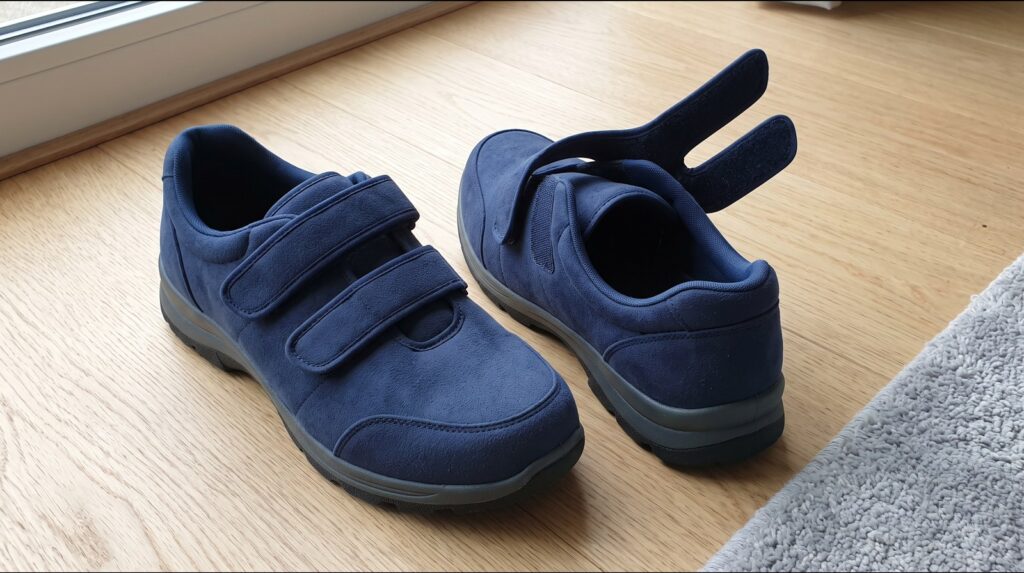
What helps is a shoe that adjusts. Look for:
- Adjustable fastenings – straps or hook-and-loop closures you can loosen as the day goes on.
- Extra width and depth – swelling often sits across the top of the foot and around the toes, not just the sides.
- A generous opening – much easier to get into, especially with arthritis or difficulty bending.
- Soft uppers and a stable sole – to protect fragile skin and keep you steady.
The catch is that a shoe roomy enough for your afternoon foot can feel loose once the swelling settles, so the fastening has to do the work of keeping it secure.
Shoes We Have Found Useful
Two options I have found particularly useful for clients whose feet change through the day are the Anodyne wrap-style double depth shoe and Revere adjustable sandals, which have multiple points of adjustment. Every foot is different, so we will talk through which suits your feet and your day.
We stock a selection of Anodyne and Revere in clinic, so you can see and try styles that could suit your needs. If your new shoes need tweaking once you have worn them for a while, bring them to your next appointment and we’ll check the fit and help you adjust the straps for your feet.
For more detail on why feet and ankles swell, the common causes, socks and simple things you can do at home, I have written a longer guide for The Comfort Co’s Podiatry Corner: What is Oedema? A Podiatrist Explains the Causes and Treatment.
Our Recommendation
If your feet swell through the day, ask yourself:
- Has the cause of my swelling been checked?
- Can I adjust my shoes as my feet change?
- Do my shoes still feel secure when the swelling goes down?
- Am I relying on slippers or socks because nothing else fits?
If you’re unsure, book an appointment with our podiatry team on (07) 5363 0288 or book online. Book an afternoon appointment if you can, and bring the shoes you wear most, plus any you have given up on. Seeing your feet with some of your usual swelling present tells us far more than a description can.
The right shoes won’t fix the swelling itself, but they can keep you comfortable, protected and steady on your feet while the cause is managed.